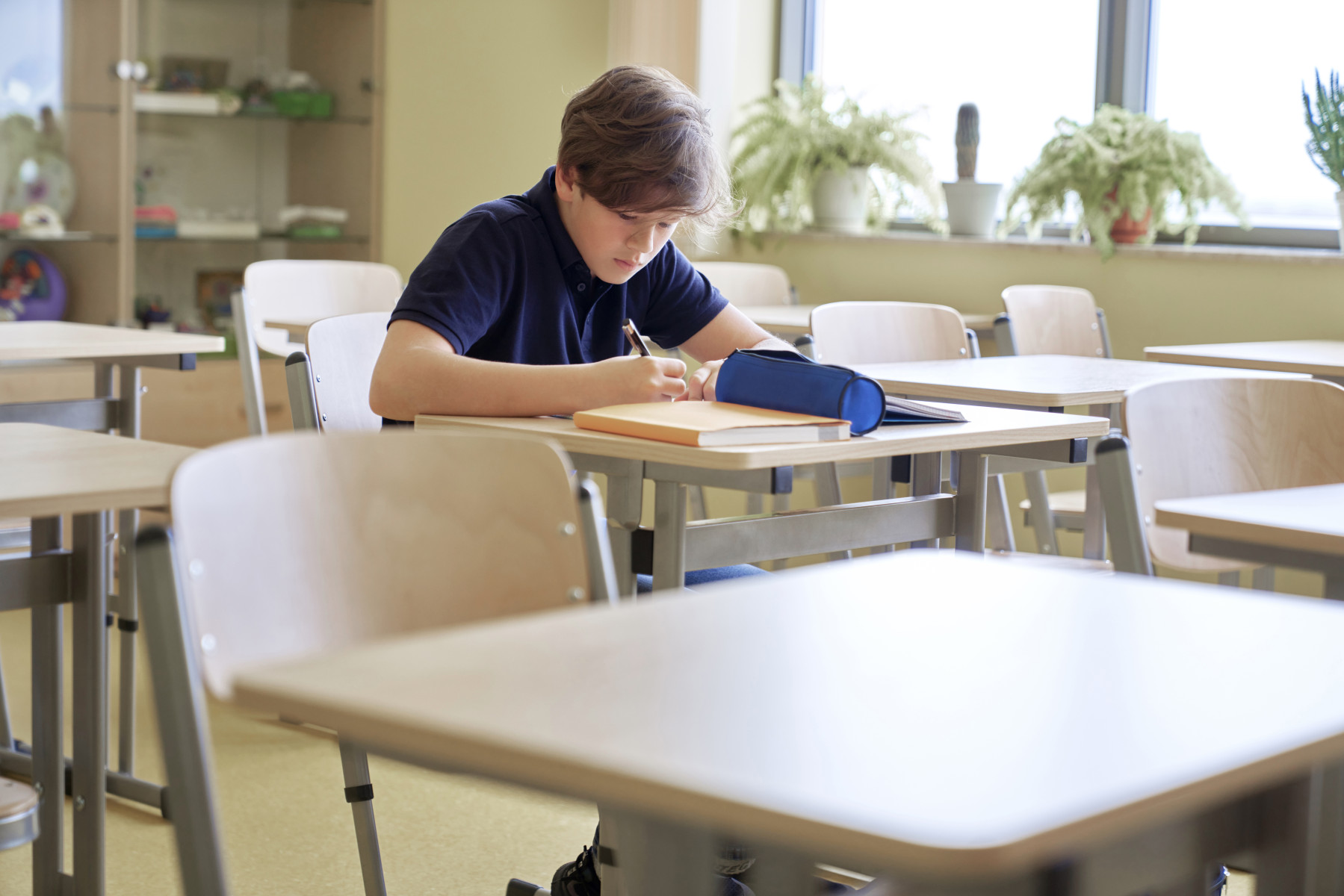
School isolation rooms are damaging pupil wellbeing, new study warns
Urgent call for positive alternatives for schools
Children placed in school ‘isolation rooms’ are losing learning time, feeling cut off from their peers and suffering damage to their wellbeing, according to new research from The University of µÎµÎ´òÅÚapp.
The study, published in the , is the first large-scale investigation into internal exclusion in England and reveals that the practice is far more common - and harmful - than many parents or school leaders may realise. The researchers hope their findings will spark urgent debate among teachers, policymakers and parents about how schools can support pupils to achieve and flourish using alternative approaches to managing their behaviour.
Among their recommendations are methods that are restorative (focusing on repairing harm and rebuilding relationships rather than solely on exclusion) and trauma-informed (recognising that some disruptive behaviour may stem from underlying trauma or adverse experiences). The research recognises the challenges of managing behaviour but calls for the development of alternative approaches.
The team of experts analysed survey data from the #BeeWell programme which included more than 34,000 pupils at 121 mainstream secondary schools across Greater µÎµÎ´òÅÚapp. They found that one in 12 pupils (8.3%) reported being placed in isolation at least once a week, often spending more than a full school day there.
Isolation - also known as internal exclusion - involves removing a pupil from class for disruptive behaviour and making them work alone or in silence in a separate room. Unlike suspensions or permanent exclusions, there are no national rules on how isolation should be used, or for how long.
Key findings from the research:
- One in 12 pupils (8.3%) reported being placed in isolation at least once a week
- The average time spent in isolation was 8.5 hours a week – more than a full school day
- Even after accounting for behavioural difficulties:
- Children with recognised special educational needs (an Education, Health and Care plan) were more than twice as likely to be in isolation
- Children on Free School Meals were more than one and a half times more likely to be in isolation
- Children who identified as LGBTQ+ were nearly twice as likely to be in isolation
- Black, Asian and mixed heritage children were more likely to be in isolation than their White British peers - Isolated pupils reported reduced belonging, poorer relationships with teachers, and (for girls) lower levels of mental wellbeing than a very closely matched sample of their non-isolated peers.
- Schools with higher rates of suspensions also tended to isolate more pupils, undermining the idea that internal exclusion prevents more serious sanctions.
We know schools face huge pressures in managing behaviour, but our evidence suggests isolation is not the solution. We need investment in positive behaviour support, restorative approaches and better mental health provision - strategies that keep children connected to their learning and their school community.
“Internal exclusion is happening every day in classrooms across England, yet it is largely hidden from view,� said lead author Dr Emma Thornton. “We know that it can provide an effective short-term solution for teachers dealing with disruption in their class, who want to create the conditions for all pupils to thrive. But our findings show that it is disproportionately applied to young people most in need of support, and leads to lost learning, weaker connections with teachers, and in some cases poorer mental health.�
#BeeWell is one of 40 organisations calling for a government definition of inclusion as measurable through data on the amount of lost learning - time spent away from the classroom through isolation, suspension and absence - and through pupil experience data, such as the #BeeWell data used in this study. The Inclusion for All campaign asks that the upcoming Schools White Paper should provide guidance and support schools to continuously improve and reduce the amount of time spent away from classrooms and peers.
“What’s needed is more research and practice-sharing on effective ways to set up internal spaces that are diagnostic, supportive and get children back to class as soon as possible,� said Kiran Gill, CEO of charity The Difference charity. “That’s why The Difference is working with schools across the country to better measure inclusion, and to set up spaces internally to support young people in crisis before their challenges escalate. We’re excited to bring some of those school leaders together with #BeeWell and others at our annual conference IncludED in January to share strategies that are working, as measured by pupils’ own experiences.�
The research is part of the , a major study of young people’s wellbeing in Greater µÎµÎ´òÅÚapp, Hampshire, Isle of Wight, Portsmouth and Southampton, funded by The University of µÎµÎ´òÅÚapp and partners including The National Lottery Community Fund.