µÎµÎ´òÅÚapp scientists stabilise rare three‑atom metal ring, revealing new form of aromaticity
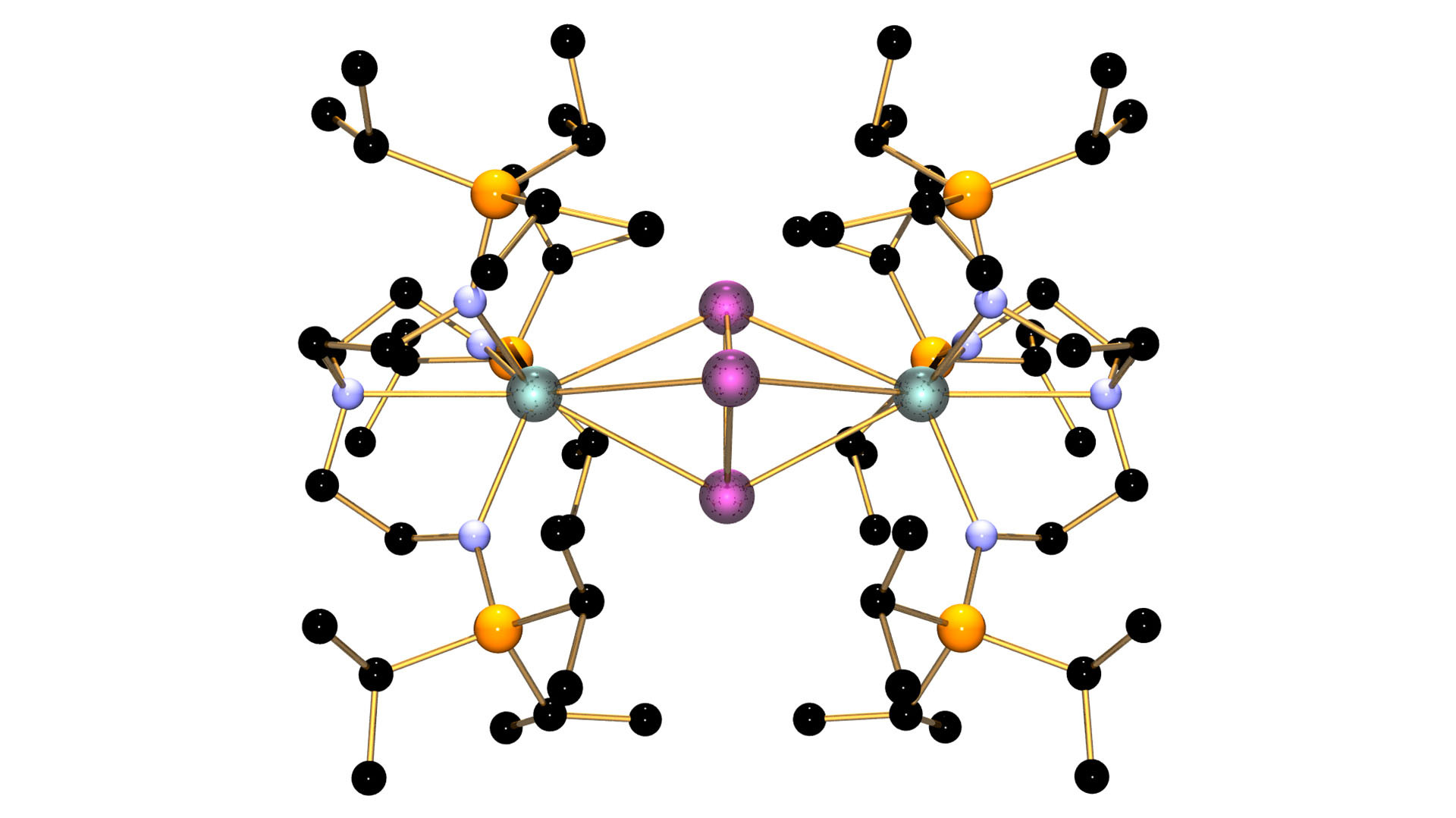
- First actinide inverse-sandwich complexes containing a cyclo‑Bi₃³� ring (diuranium and dithorium).
- Definitive aromatic behaviour in the heaviest known 6p system, with measurable ring currents and exalted diamagnetism, evidencing σ‑aromaticity over π‑aromaticity.
- Establishes a new benchmark linking organic aromaticity (e.g. benzene, cyclopropenyl cation) to all‑metal rings – expanding the design space for future functional materials.
In a world first, the team, led by , discovered a new type of aromatic molecule made entirely of metal atoms, the heaviest of its kind ever confirmed. The team stabilised an extremely rare three‑atom ring of bismuth, held between two large metal atoms (uranium or thorium) in a structure known as an “inverse‑sandwich� complex.
This breakthrough provides fresh insight into one of chemistry’s most familiar concepts – aromaticity – and shows it can occur not only in carbon‑based rings like benzene, but also in unusual clusters of heavy metals.
A new twist on a classic chemical idea
In everyday chemistry, aromatic molecules such as benzene are valued for their stability, which comes from electrons circulating smoothly around a ring. This “ring current� is a signature of aromaticity and is usually found in organic (carbon-based) molecules.
The new study shows that a tiny ring of three bismuth atoms (Bi₃) also supports these circulating currents, behaving as an aromatic system, despite being made entirely of heavy metals.
Even more remarkably, this behaviour is dominated by sigma (σ) electrons, rather than the more familiar π electrons that define aromaticity in organic chemistry.
What this means for chemistry
The finding bridges the gap between traditional organic chemistry and the emerging field of all-metal aromaticity, offering:
- The heaviest aromatic ring ever identified, made from three bismuth atoms.
- The first actinide “inverse sandwich� complexes supporting such a metal ring, using uranium and thorium to hold the Bi₃ unit in place.
- Clear experimental and computational evidence that the bismuth ring has strong ring currents – a hallmark of aromaticity – even in the presence of large, magnetic metal ions.
This adds a new entry to the catalogue of aromatic molecules and helps scientists understand how aromaticity behaves in heavy elements, which is valuable for areas such as materials science, metal cluster chemistry, and actinide research.
Aromaticity is often taught through benzene, but here we’ve shown a three‑atom ring of bismuth – supported by uranium or thorium – can sustain robust, measurable ring currents. It’s a powerful reminder that the deepest principles of chemical bonding apply far beyond carbon.
A step toward understanding heavy element chemistry
The international team synthesised and studied two new complexes:
- a diuranium complex containing the Bi₃ ring, and
- a dithorium version that behaves similarly.
Using Xray crystallography, the researchers confirmed the shape and symmetry of the three-atom ring. They then used magnetic measurements, spectroscopy and advanced computer modelling to show that electrons move around the bismuth ring in a continuous, stabilising current, just as they do in classic aromatic molecules.
Even more intriguingly, the dithorium complex showed measurable exalted diamagnetism, an effect directly associated with aromatic ring currents.
The work provides benchmark data to help chemists compare traditional organic aromaticity with its all‑metal counterpart. It also shows how unusual ring systems can be stabilised using actinides – metals at the bottom of the periodic table that often behave in unexpected ways.
By proving that such a heavy‑element ring can not only exist but also display aromatic stability, the research opens new possibilities for designing metal‑based clusters and exploring the boundaries of chemical bonding.
This research was published in: Nature Chemistry
Full title of the paper: All-metal aromaticity of cyclo-Bi33− in diuranium and dithorium inverse-sandwich-type complexes
DOI: 10.1038/s41557-026-02123-8
URL: